Knowledge Center
Eye exams are a vital part of your overall health care. Learn why eye exams matter, how they work, and how vision insurance can make keeping your eyes healthy more affordable.
lh-rounded
true
lh-circular
false
lh-full-width
false
The value of an eye exam
Many people think they only need an eye exam when they notice vision problems. But a comprehensive eye exam is like an annual physical for your eyes and should be done regularly.
This kind of preventive care can give you the best chance for long-term eye health.
Eye exams can spot early signs of eye disease before you even notice symptoms. Conditions like glaucoma, cataracts, and age-related macular degeneration often start quietly. With early detection, these common conditions may be more treatable. Your eye doctor can also catch signs of other health issues, like high blood pressure or diabetes, simply by looking at the blood vessels in the back of your eye.
What to expect at an eye exam
If it’s been a while since your last visit, it helps to know what to expect. A routine eye exam usually takes less than an hour. Your eye doctor will guide you through each step. Here’s what typically happens during an exam:
layout
vertical-left
theme
white
media-type
none
icon-size
xxl
gradient
false
bg-fill
false
eyebrow-size
md
title
Vision screening
heading-level
h3
heading-size
sm
rte-description
You’ll likely start with a visual acuity test. This checks how clearly you can see at different distances. You’ll read letters on a wall chart while your doctor checks your vision.
cta1-variant
text
cta2-variant
text
layout
vertical-left
theme
white
media-type
none
icon-size
xxl
gradient
false
bg-fill
false
eyebrow-size
md
title
Eye health check
heading-level
h3
heading-size
sm
rte-description
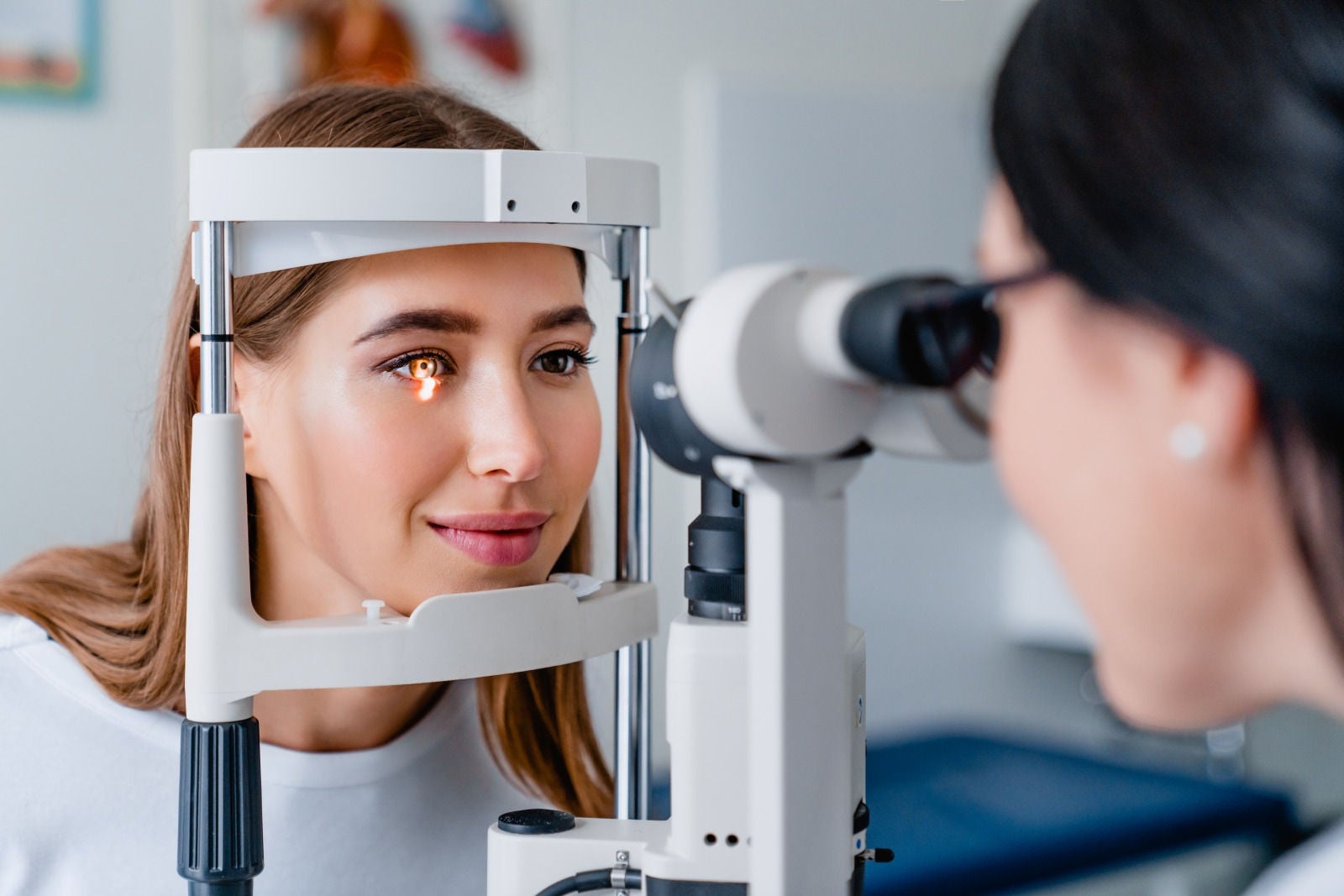
Your doctor may use a slit lamp, which is a bright microscope that gives a close look at the front of your eye. This helps them check for irritation, injury, or other eye health concerns.
cta1-variant
text
cta2-variant
text
layout
vertical-left
theme
white
media-type
none
icon-size
xxl
gradient
false
bg-fill
false
eyebrow-size
md
title
Eye pressure measurement
heading-level
h3
heading-size
sm
rte-description
You may also have a pressure test called tonometry. Sometimes this is the quick puff-of-air test. It measures the pressure inside your eye, which can help your doctor watch for early signs of glaucoma.
cta1-variant
text
cta2-variant
text
layout
vertical-left
theme
white
media-type
none
icon-size
xxl
gradient
false
bg-fill
false
eyebrow-size
md
title
Vision prescription review
heading-level
h3
heading-size
sm
rte-description
If you need glasses or contacts, your doctor may check your prescription. You’ll look through a machine called a phoropter. It holds different lenses and helps your doctor find which ones help you see clearer. This can help spot common vision problems like nearsightedness, farsightedness, and astigmatism.
cta1-variant
text
cta2-variant
text
How vision insurance can help cover eye exams
Vision insurance can help make routine eye care like exams more affordable. Many people get coverage through an employer, but you can also purchase vision insurance on your own.
Vision coverage is designed to help lower your out-of-pocket costs for regular care. Most plans cover the full cost of your annual eye exam when you use an in-network eye doctor. If you go out-of-network, you might have to pay more.
Plans also usually offer an allowance for eyeglass frames, eyeglass lenses, and contact lenses. Before scheduling an eye exam, review your plan documents. Knowing exactly what your insurance covers helps you avoid surprise bills and lets you shop for new glasses with confidence.
lh-rounded
true
lh-circular
false
lh-full-width
false
Tips for taking care of your vision
An eye exam is a critical way to track your eye health, but there are small steps you can take every day to protect your vision.
- Protect your eyes. Wear sunglasses outside to help shield your eyes from ultraviolet (UV) light. Use good lighting when you read, work, or use a screen.
- Give your eyes a break. Take screen breaks during the day. Look away often and blink more to help with dry, tired eyes.
- Support eye health. Eat foods that support eye health, like dark leafy greens. Drink water during the day to help your body and eyes stay hydrated.
- Keep your eyes clean. Wash your hands often and try not to rub your eyes.
Member Knowledge Center
Get reliable answers to your insurance questions, such as how to get prior authorization and submitting a claim.
layout
vertical-left
theme
white
media-type
image

icon-size
xxl
gradient
false
bg-fill
false
eyebrow-size
md
title
Does vision insurance cover glasses?
heading-level
h3
heading-size
xs
cta1-variant
text
cta1-text
Read more
cta1-srtext
Read more about coverage for glasses
cta2-variant
text
layout
vertical-left
theme
white
media-type
image

icon-size
xxl
gradient
false
bg-fill
false
eyebrow-size
md
title
What is a health care specialist?
heading-level
h3
heading-size
xs
cta1-variant
text
cta1-text
Read more
cta1-srtext
Read more about specialists
cta2-variant
text
layout
vertical-left
theme
white
media-type
image
icon-size
xxl
gradient
false
bg-fill
false
eyebrow-size
md
title
Does insurance cover contacts?
heading-level
h3
heading-size
xs
cta1-variant
text
cta1-text
Read more
cta1-srtext
Read more about coverage for contacts
cta2-variant
text